
Packing & shipment preparation
Wood crates from China to Hawaii: an ISPM 15 packing check
A supplier offers a “plywood export crate.” The photo shows plywood walls, but the machine sits on timber runners and loose wooden blocks hold it in place. Before arranging a China-to-Hawaii shipment, ask what the entire package is made of. The word plywood describes the panels; it does not settle the status of the other wood.
Check the base and blocking, not just the walls
ISPM 15 is the international phytosanitary standard for wood packaging. USDA APHIS requires regulated packing entering the United States to be treated and marked. Its scope includes pallets, skids, crates and dunnage used to support, protect or carry cargo. Dunnage means material used to secure or support cargo. APHIS lists plywood and several other processed materials as alternatives outside its wood packaging regulation. A mixed package still needs its raw-wood components considered.
Ask the packer to identify each component before the crate is closed. Include the pallet underneath, runners, internal braces and any loose blocks to be added during loading. An unseen base is a missing detail, not evidence that the whole package is exempt.
In the opening example, record “plywood panels; runner material to confirm; blocking material to confirm.” Keep those questions open until the supplier identifies the materials and the appropriate packing provider resolves their status.
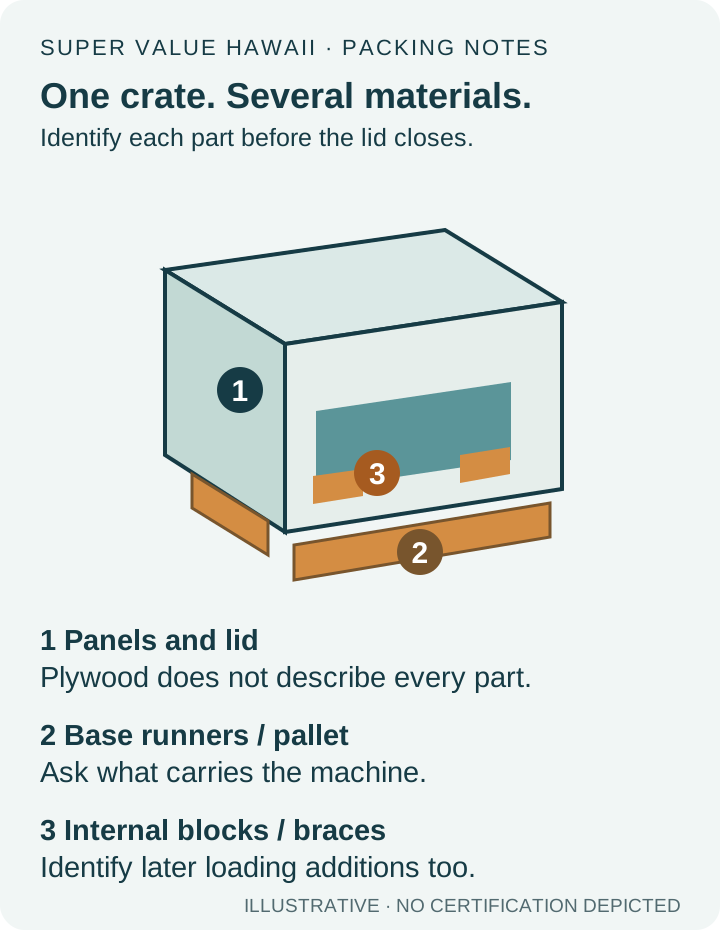
- Panels: identify the sheet material used for the walls and lid.
- Base: identify the pallet, skids and runners carrying the load.
- Inside: identify braces, blocks and other supports before closure.
- Loading: identify who supplies any additional dunnage.
Tie readable marks to the actual package
APHIS tells importers to source compliant packing from accredited providers and review the exporting country’s plant protection certification. Its guidance identifies the IPPC symbol, country code, facility number and treatment code as elements of the official mark. A “fumigated” line in a quote is too vague to connect a particular crate to its provider.
Request a close photo of each visible mark and a wider photo showing where it sits on the identified package. Use the same package ID in the photos, packing list and review record. A sharp photo of a different pallet, or a stock image from the packer’s brochure, leaves the shipment unverified.
If a mark is faint, covered or inconsistent with the supplier’s explanation, ask the packing provider to resolve it before pickup. Do not redraw a mark or ask a warehouse to improvise one. The IPPC says authorization to use the mark comes from a national plant protection organization or an officially mandated organization.
Please identify the material of the panels, base runners, internal braces and loading blocks for each package. For regulated wood packing, identify the authorized provider and send a readable close-up of the actual mark plus a wider photo linking it to the package ID. Please confirm whether any wood will be added or replaced after these photos.
Use photos to flag problems, not certify entry
APHIS identifies illegible or inappropriate marks, missing marks and signs of infestation as concerns. Examples of pest evidence include exit holes, feeding trails and insect waste resembling sawdust. The IPPC also states that the standard’s measures do not provide ongoing protection against later contamination.
Have the supplier inspect the packing when it arrives and before use. Ask for an explanation of suspicious holes or debris rather than deciding from a thumbnail. A buyer’s photo review can identify questions; it cannot establish treatment history, rule out hidden pests or guarantee acceptance by inspectors.
Keep the practical reviews separate. A packing provider addresses treatment and marking. The equipment supplier or a suitable packing specialist addresses load support, protection and lifting. An ISPM 15 mark does not supply a stacking limit, lifting plan or moisture-protection specification.
Reopen the review when the packing changes
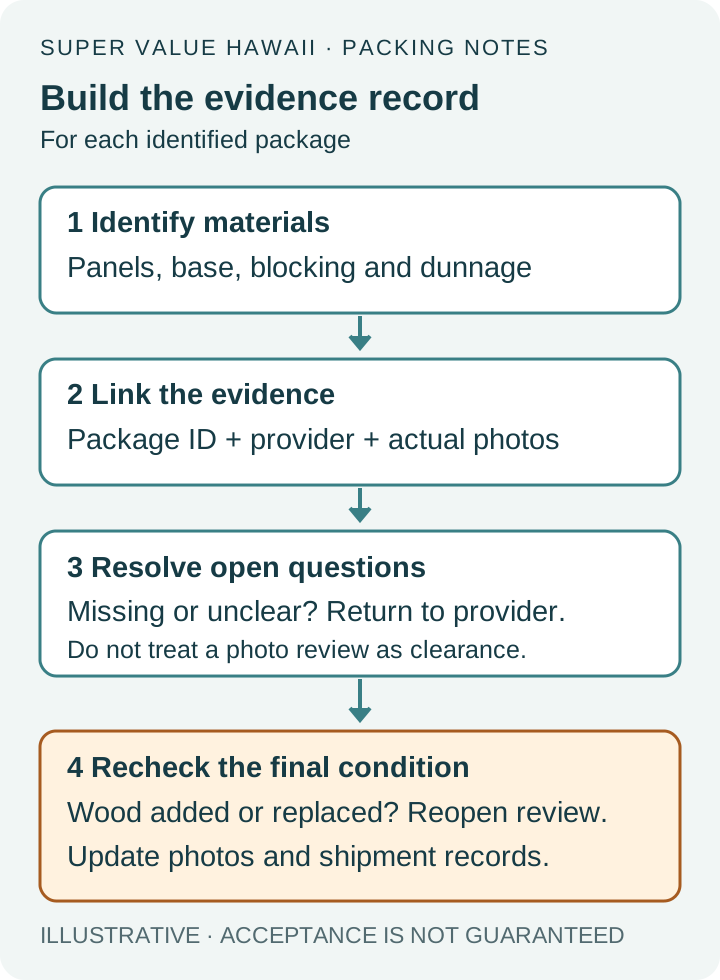
Suppose a consolidation warehouse replaces a damaged runner or adds wooden blocks after the supplier’s photo set. That is a new packing detail to check. Retain the earlier photos, identify the changed component and obtain the packing provider’s assessment of what is required. Do not carry the earlier review status forward automatically.
Give the person arranging pickup one current record for each package: material description, packing provider, photo filenames, unresolved questions and the supplier’s confirmation of the final condition. If a change affects outside dimensions, gross weight or package count, revise those shipment records too.
For shared container space to Hawaii, tell the coordinator which packages still have open packing questions before planning collection. Cargo suitability, readiness and actual available space still need assessment; a completed record does not reserve space.
Agree on the remedy before arranging pickup
Put the packing specification and responsible provider in the purchase agreement. APHIS recommends including ISPM 15 compliance in the contract. Also ask the seller who coordinates correction if the final packing differs from the agreed specification. A quoted crate charge does not explain who pays for replacement packing, extra handling or a delayed collection.
If an official Emergency Action Notification is issued, follow the notice and coordinate with the named CBP and APHIS contacts and your broker. The corrective action depends on the violation. Do not assume an extra document or a treatment arranged on your own will release the shipment.
For an initial shipment discussion, send the equipment description, package IDs, outside dimensions, gross weights, supplier locations and intended Hawaiian island, together with the packing photos and open questions. We can use that information to assess coordination needs. Island handover arrangements and costs are confirmed separately.
- Who is preparing the final packing, including later warehouse additions?
- Which actual package does each photo and provider record describe?
- What remains unresolved, and who will answer it?
- Will a change require new photos, measurements or packing-list entries?
- Who confirms the final packing before collection is arranged?