
Equipment packing
Moisture protection for equipment shipped from China to Hawaii
A supplier sends a photo of a closed wooden crate and calls it ready for sea freight. You can see the case, but you still need to know how the machine inside is protected from moisture. For equipment shipped from China to Hawaii, ask for the preservation method while the supplier can still show the work before closing the package.
Ask what the quoted packing actually includes
Have the supplier identify the machine, configuration and package reference, then name the proposed protection. Ask which surfaces and components it covers, who selects the method and where the packing specification is recorded. A line on the quotation saying “export crate” leaves those details unresolved.
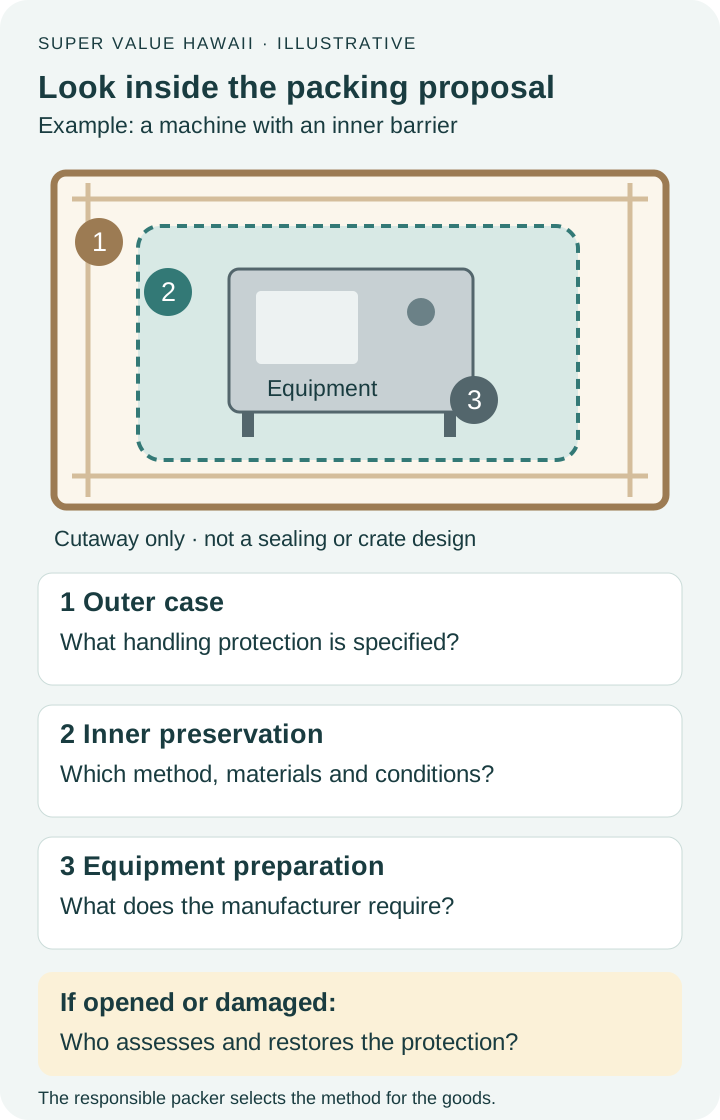
Keep separate entries for the outer case, the preservation around the equipment and any preparations needed before installation. Ask the equipment manufacturer about materials that may contact the machine and any removal instructions. Give the packer the intended route and receiving plan so the proposal can be assessed for this order.
The references below describe particular manufacturers’ and packers’ practices. They help frame the questions; they are not a universal packing specification or an import approval for your equipment.
Check the proposed system, not just the visible wrap
MAN Energy Solutions’ published guideline distinguishes coating, volatile corrosion inhibitor (VCI) and desiccant methods. VCI means a corrosion inhibitor released from a carrier material. Its choice of method depends on the goods, existing preservation and required protection period. For its desiccant method, the guideline describes a sealed film enclosure and stresses the importance of keeping it intact.
South Shore Crate & Pack separately lists barrier bags, desiccant bags and humidity indicators in its packing offering. A desiccant absorbs moisture; an indicator provides information that must be interpreted using that product’s instructions. Neither a bag visible in a photograph nor an indicator alone establishes the condition of the whole machine.
Ask the packer to specify the selected materials and the basis for their quantity and placement. Request the instructions used to check and close the package. Do not select a bag count from the crate’s CBM or substitute a different film based on appearance. Leave the protection design and material compatibility assessment with the responsible manufacturer or packer.
Put the storage assumptions in the same request
Tell the supplier whether you expect to unpack soon after delivery or store the machine first. Ask for the conditions and period covered by the proposed preservation, the date that period starts and the checks required if storage continues. Keep these as written assumptions, rather than treating the shipping estimate as the entire storage plan.
For a Hawaii order, name the actual receiving arrangement: covered storage, a building still being prepared, or another location awaiting assessment. If the conditions are undecided, say so. Ask the packer what information is needed before confirming its proposal. A closed crate should not be treated as permission for outdoor storage.
If the collection plan changes, send the revised dates and storage conditions back for review. Record the response beside the packing revision, including any inspection or renewal the packer requires. Avoid extending a preservation period yourself because the outside of the crate still looks sound.
Agree what happens if someone opens the protection
Consolidation may involve counting, checking or repacking goods. Tell the receiving provider which packages have preservation that needs special handling. Ask how inspection can be coordinated with the packer’s instructions. Do not authorize staff to cut an inner enclosure merely to obtain a better photo.
MAN’s guideline warns that incorrect opening and reclosing can impair its desiccant method. For your shipment, obtain a written process for an opened or damaged enclosure: who assesses it, who restores it and what evidence records that work. A carrier, warehouse or inspector may have its own requirements; settle the responsibility with the parties involved.
Illustrative situation: an attachment is added after the machine has been packed. Before placing it inside the protected enclosure, ask the packer to assess the opening and the revised contents. Keep the new packing record tied to the same package reference. This is a fictional planning example, not a customer shipment or an instruction to reseal a bag yourself.
Request evidence before the case is closed
Ask for a short photo sequence tied to the actual equipment and package reference. Agree the views before packing starts so the supplier can document the work at the right stage. Use the images alongside the written method; photos cannot certify protection performance.
- The identified machine and the preparation specified by its manufacturer.
- The selected preservation materials and their package references, with labels readable where relevant.
- The packing stages needed to document the agreed method before the outer case is closed.
- The closed package, packing date and instructions to pass to the receiving provider.
- Any later opening, damage, revised method or restoration, with the responsible party’s record.
At receipt, follow the supplier’s unpacking and preservation-removal instructions. Record the visible packing condition and any indicator reading using its stated interpretation. Refer unexplained moisture, damage or corrosion to the responsible supplier or specialist before machine acceptance. Do not turn a photo of intact packing into a conclusion that the equipment is ready to operate.
For a shipping discussion with Super Value Hawaii, send the machine name and photos, packed dimensions and gross weight, the supplier’s proposed packing method, and your destination island and storage plan. We can discuss shipment coordination within the agreed scope. Packing design remains with the responsible specialist; each island’s arrangements and fees require assessment.