
Equipment receiving
Receiving equipment in Hawaii: record what you actually checked
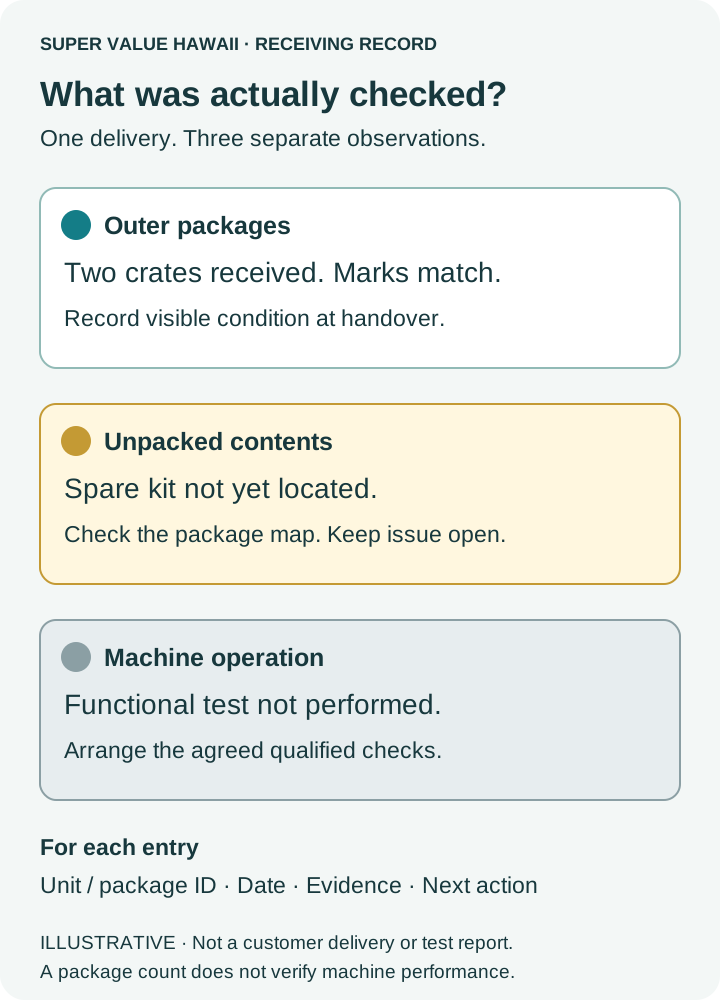
Two crates arrive at your Hawaii business. Both package marks match the list, but you have not opened either crate. Record that narrow result first. An equipment receiving record becomes useful when it shows what was checked, what was observed and what remains unexamined. Keep the outer-package check, the contents check and any later functional test as separate entries.
Prepare the receiving file before the appointment
Put the current packing list, package marks, agreed accessory list and supplier references in one private receiving file. Include the final pre-shipment photographs where available. Name the person who will record the handover and the person who will check the unpacked contents; those tasks may happen at different times.
Keep the booked provider’s reporting instructions and contact route available. Ask about the applicable procedure before delivery, including what information to record and whom to notify if something is missing or visibly damaged. This guide provides a working record structure; it does not replace the provider’s procedure or establish a reporting deadline.
For supplier consolidation from China to Hawaii, retain the original supplier-and-order reference as well as any new warehouse label. The receiving team needs to trace a carton back to its contents record even after relabelling or repacking.
At handover, record the outer packages
Match each visible package mark to the expected register. Note the count, location, date and time, and record any missing, extra or unreadable mark. Photograph the package as presented and take closer views of specific visible damage or disturbed packing. Keep both the overall view and the detail tied to the same package ID.
Use observations that another person can understand. “CR-02 has a split board on the right side; contents not examined” is more useful than “shipment damaged.” Avoid guessing when or where the problem occurred. Follow the provider’s instructions for documenting the exception and notify the relevant parties promptly.
A matching outer count leaves the contents check open. If you received two marked crates without opening them, record exactly that. Do not copy a blanket “all items checked” entry from a previous delivery.
During unpacking, preserve the sequence
Arrange unpacking with people who can follow the manufacturer’s and handling provider’s instructions. If the load appears unstable, the packing is damaged or safe access is uncertain, stop and ask the responsible professional how to proceed. This record does not prescribe a lifting or dismantling method.
As each package is safely opened, photograph the visible contents before moving individual items where practical. Link inner cartons and loose components to their parent crate. Compare the quantities, model or part references and included accessories against the current list. Record any area or item you could not examine.
If a component appears missing, check the supplier’s package map and any nested boxes before drawing a conclusion. Ask the supplier to identify its recorded packing location. An unresolved item should remain “not located” until the discrepancy is reconciled. Record how it was resolved rather than silently changing the original observation.
Keep a discrepancy tied to its evidence
Give each issue a short reference. Record the expected item and quantity, the actual observation, the package ID, supporting filenames, who was notified and the next action. Use the same reference in follow-up messages so photographs and replies stay attached to the right question.
For an example of why the source records matter, Maersk’s Cargo Insurance checklist names commercial invoices, packing lists, delivery records and photographs among the supporting documents for its claims process. That is one product’s published checklist. It does not establish which policy, carrier procedure or coverage applies to your cargo.
For example, a packing list places one spare kit in CR-02. During unpacking, the receiver finds the control cabinet but cannot locate the kit. The first entry records the missing item and the inspected area. If the supplier later points to an inner compartment and the kit is found, add a dated resolution with the photograph. This is a fictional documentation example; it does not assign responsibility or establish a customer outcome.
Keep original photographs and documents. Do not discard relevant packing before checking the provider’s or insurer’s instructions when an issue may need investigation. Share the necessary evidence privately with the responsible parties, rather than posting labels, invoices or contact details in a public group.
- Expected: item reference, quantity and source document revision.
- Observed: what was seen, counted or left unexamined.
- Location: outer package mark and any inner-box reference.
- Evidence: original photo or document filenames and observation date.
- Follow-up: recipient, notification time, reply and next action.
- Resolution: what was verified, by whom and when; keep unresolved fields visible.
Leave machine acceptance to the agreed checks
Record visible condition and contents separately from installation and operation. A machine may be present in its crate while its electrical suitability, assembly or operation still needs review. Schedule those checks with the appropriately qualified person under the manufacturer’s instructions and the purchase agreement.
Keep the test scope, actual conditions, findings and exclusions with the unit reference. If the machine has not been powered or tested, say so. An unpacking photograph cannot establish performance under load, and an earlier factory video does not describe what was checked at the Hawaii site.
When planning the shipment with Super Value Hawaii, identify the receiving island, handover point and who will reconcile the packages and unpacked items. Each island’s transport and handling arrangements and fees need their own assessment. Shared container space remains subject to cargo suitability, readiness and actual space.