
Equipment shipment preparation
Equipment to Hawaii: separate crate handling from machine lifting
The packing list describes a wooden crate. The supplier’s lifting drawing shows a bare machine. For equipment moving from China to Hawaii, these records may describe different loads at different stages. Before collection, ask who will handle each stage and what information they need for that exact condition.
Describe the load at each handling stage
Start with a short sequence: collection of the finished package, transfer at the destination, opening the package, and movement of the unpacked machine. Name the responsible party for each step. If the supplier or receiving team expects an intermediate change, add it explicitly.
For each stage, ask whether the equipment remains on its shipping base, whether accessories are attached, and whether packaging is still in place. Keep the supplier’s description with the package reference. A drawing for the bare machine should not silently become the handling instruction for the crate.
This is an information handover for the transport and receiving teams. The party responsible for the move must assess the proposed method, equipment and site. This article does not specify lifting points, rigging arrangements or equipment capacities.
Build two clearly identified sets of information
Ask the supplier and packer to identify the records that apply to the finished package. Ask the machine manufacturer for the instructions that apply after unpacking. One company may provide both sets, but the load condition still needs to be clear.
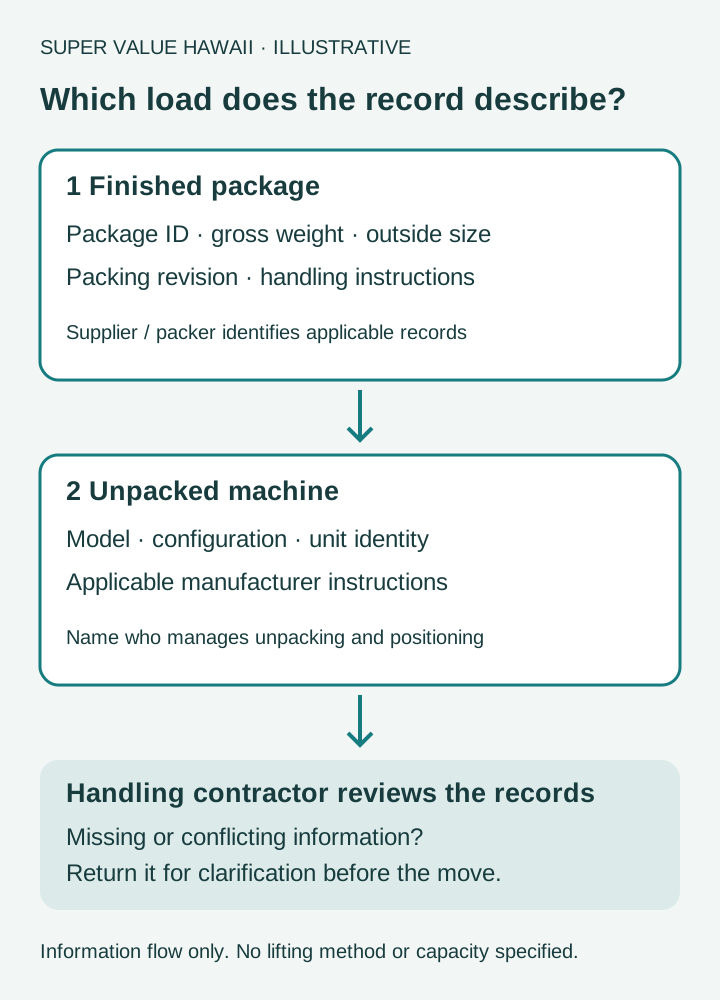
- Finished package: package reference, outside dimensions, gross weight and packing revision. State whether the listed weight includes the base, crate and contents.
- Package handling information: supplier or packer instructions for the actual finished load, with any stated restrictions. Request clarification of unclear or missing markings.
- Unpacked machine: exact model, configuration and serial number when assigned, with the applicable handling document and its revision.
- Separate items: identify accessory cartons, shipping hardware and any dedicated handling components in the package list. Record where they will be found.
- Open questions: record the missing information, the party expected to answer and the stage that depends on the answer.
Ask for weight units and the basis of each figure. Keep a measured or confirmed weight distinguishable from an estimate. Do not infer a usable handling method from weight and dimensions alone.
Ask which document applies before using it
Haas’s ST-25Y pre-installation guide directs readers to model-specific lifting information and requires professional riggers for preparation and lifting. Its guidance illustrates why the actual manufacturer’s instructions and the people carrying out the move matter. It does not establish a method for another brand or for that brand’s crated shipment.
Send the relevant documents to the receiving or handling contractor early enough for questions to go back to the supplier. Ask the contractor to identify what remains missing for its assessment. A file being forwarded is only evidence that it was shared. Keep the response showing what was reviewed and what remains unresolved.
If instructions conflict with a package label or the load presented for collection, preserve both records and request clarification. Avoid choosing whichever instruction appears easier to follow.
Keep unpacking and positioning in the agreed scope
A delivery arrangement may end with a packed load at an agreed handover point. Opening the crate and moving the machine into its working position need their own named responsibilities. Ask the provider to state which of these tasks its offer covers and which need a separate arrangement.
Have the receiving team describe access constraints and the intended place for opening the package. The handling contractor should review the proposed sequence against the real site. Do not assume that a vehicle reaching the property settles the later movement of the machine.
- Who receives the packed load at the named destination point?
- Who opens the package, and who decides when it is appropriate to do so?
- Who handles the unpacked machine and reviews the manufacturer’s applicable instructions?
- Who retains shipping brackets, dedicated hardware and the relevant documents after unpacking?
- Which services and extra handling costs still need confirmation?
A fictional handover gap to catch before collection
Consider a fictional order with a machine on a shipping base and a separate accessory carton. The packing list gives a combined shipment weight, while the only handling drawing shows the machine without the base. The receiver has arranged delivery to a facility but has not assigned unpacking.
Record three questions against the order: what the individual finished packages weigh; which instructions describe the machine while on the base; and who will manage unpacking and subsequent positioning. Send each question to the responsible supplier, packer or receiving contractor. Keep answers linked to the package and document revision.
If the supplier changes the base or moves an accessory into the crate, update the records and return the change to the people assessing the move. An earlier review does not automatically cover a different load. This example is illustrative and does not describe a customer shipment.
Send the information gaps with your shipment enquiry
For an equipment shipment assessment, send the package list, available handling documents, destination island and proposed handover point. Identify the records still missing and whether unpacking or final positioning is being requested.
Super Value Hawaii can discuss China sourcing and shipment coordination with the information available. Handling arrangements, island services and costs need review for the actual goods and destination. Shared container space to Hawaii also depends on cargo suitability, readiness and actual space. An enquiry does not confirm a lifting plan or available capacity.