
Supplier dispatch & receiving
China warehouse delivery instructions for Hawaii equipment orders
Your supplier has the warehouse address and is ready to send the machine. Before the truck moves, check whether the receiving team is expecting that load and has agreed how it will be handled. China warehouse delivery instructions should connect one specific supplier dispatch to an accepted receiving arrangement. An address copied from an earlier order leaves too many decisions open.
Write the brief for the actual dispatch
Use one brief for each supplier dispatch, even when several orders are intended for the same Hawaii shipment. Give it a reference, revision and issue date. Link it to the supplier order and current packing-list revision. Keep the full addresses and contact details in the private working copy.
Ask the supplier to confirm the actual collection location. The sales office, factory gate and finished-goods store may be different places. Record the address in the form the local driver needs, the vehicle entrance and the person who will release the goods. For supplier-arranged delivery, record who is booking the domestic carrier and who will send the dispatch details.
Copy the receiving address and instructions from the party coordinating this shipment. Ask that party to confirm they are current for this cargo. A previously used warehouse address or a supplier’s preferred depot is not enough to establish where this load should go.
Confirm the receiving arrangement before booking the vehicle
Ask the receiving team whether an appointment or advance notice is required. Record the agreed date and local time zone, receiving contact, reference to quote on arrival and any access instructions. If the team has only acknowledged the inquiry, keep the appointment marked as unconfirmed.
For a machine or bulky crate, send the final packed dimensions, gross weight, package count and handling instructions before the receiving arrangement is agreed. Include photographs of the base and package shape. Ask the supplier and receiving provider to confirm who loads and unloads, what equipment they will use and any vehicle or access restrictions they identify.
The brief records the agreed responsibilities. It does not select lifting equipment or authorize a handling method. If a participant cannot handle the finished package, return that question to the responsible provider before dispatch. Keep the cost of domestic transport, loading, receiving and any waiting or extra handling explicit in the agreed scope.
- Dispatch reference, supplier order and packing-list revision.
- Actual collection point, release contact and vehicle entrance.
- Current receiving location, appointment status and local time zone.
- Who books transport, loads, unloads and confirms receipt.
- Final package data and handling information reviewed by the responsible providers.
- Open conditions, additional charges to confirm and decision owner.
Make the arriving load identifiable
Ask the coordinator which receiving reference must appear on the packages and transport paperwork. Retain the supplier order and individual package IDs alongside it. Confirm the required label format rather than inventing a warehouse code.
Record the expected outer packages in the brief and attach the full register. The package marks should let the receiver connect the physical load to that register. Keep any inner boxes under their parent package; the dispatch count should describe the units actually handed to the carrier.
The blank CSV is a question sheet, not an instruction to send goods to a particular facility. Fill in the confirmed details with the supplier and receiving provider, then circulate the current version privately. Leave unknown fields open and name the person who must resolve them.
Reconfirm the brief when the load or appointment changes
A dispatch brief can become outdated while the goods remain at the factory. Ask the supplier to report changes to package count, dimensions, weight, collection location or release conditions. Ask the receiving provider to report changes to the appointment or access arrangement. Send the revised facts to the people who need to assess them.
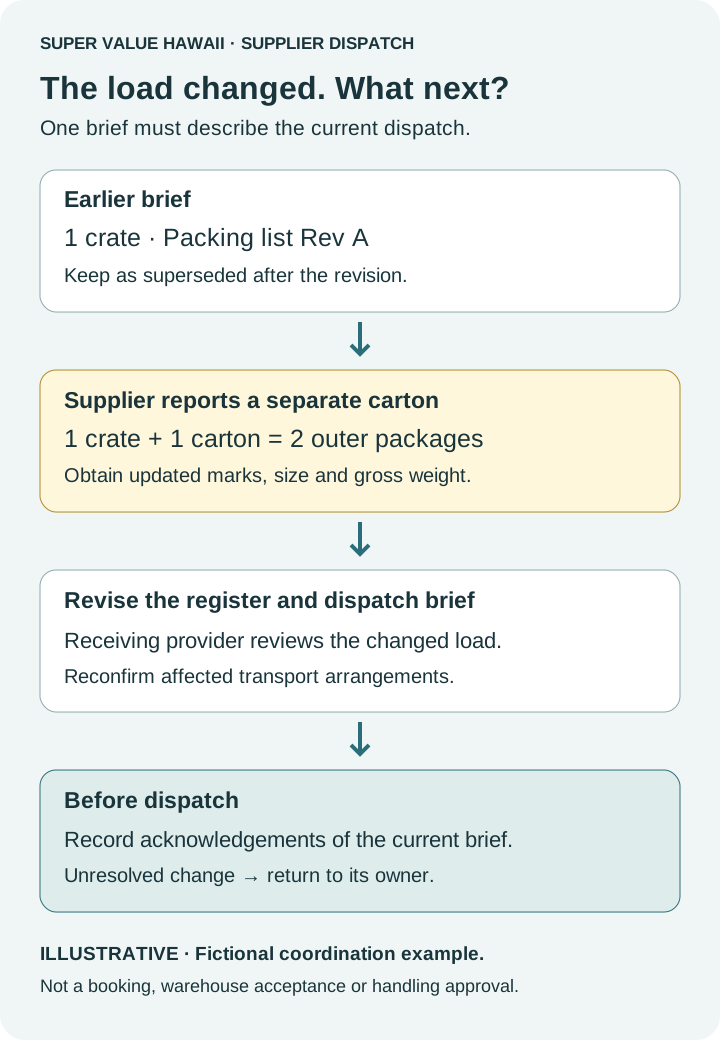
Illustrative example: a brief lists one crate. Before collection, the supplier packs an attachment in a separate outer carton. Revise the expected count and packing-list reference, obtain the new package data and ask the receiving provider to review the changed load. Preserve the earlier version as superseded. This is a fictional coordination example, not a customer shipment.
Record who acknowledged the new revision. If the driver already has an earlier brief, make sure the transport organizer gives them the current instructions and confirms the change. Do not treat an unread message or an old appointment as acceptance of the revised load.
Close the domestic handover with a receiving record
After dispatch, retain the carrier or vehicle reference and the supplier’s handover record. Keep expected arrival separate from actual receipt. Ask the receiving team to reconcile package marks and count against the current brief and note any visible discrepancy within the agreed receiving scope.
If the carrier reports delivery but the warehouse has not matched the load to your reference, keep receipt unresolved and ask the coordinator to reconcile the records. A carrier status, a counted receipt and permission to proceed with international shipping answer different questions.
For supplier consolidation from China to Hawaii, bring each supplier’s receiving status back into the combined order list. A completed domestic delivery does not reserve shared container space to Hawaii. Cargo suitability, readiness and actual space still need assessment. Tell Super Value Hawaii the intended receiving island and final handover point; each island’s onward arrangements and fees are reviewed separately.