
Equipment purchasing
Buying an attachment from China for Hawaii: check compatibility
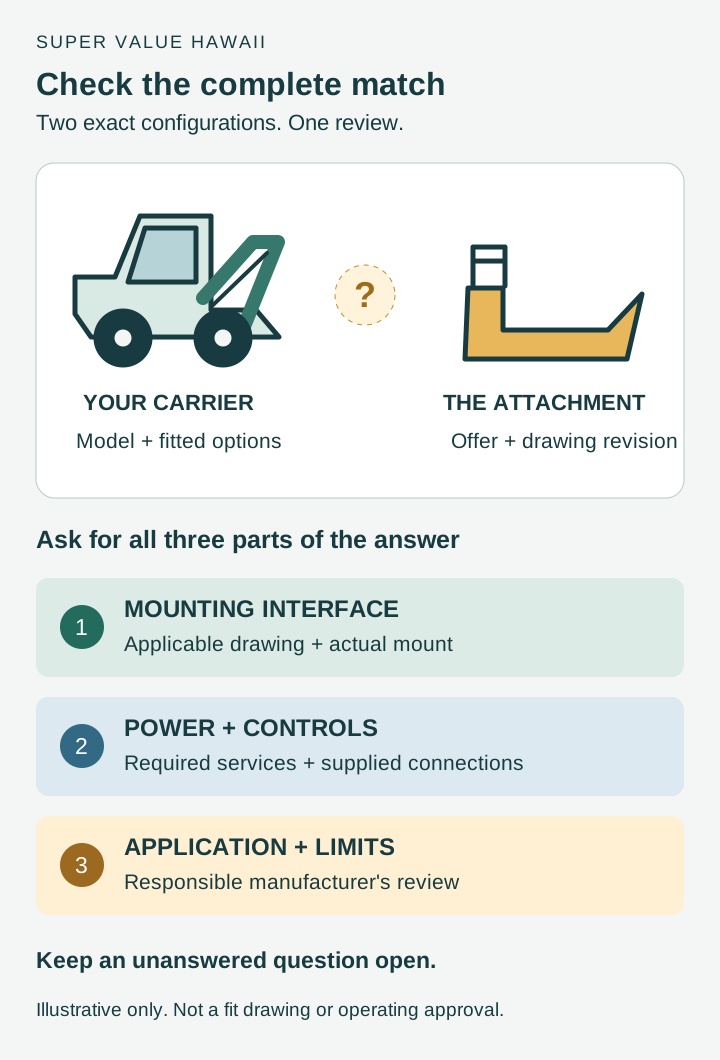
A supplier advertises a loader attachment as “universal,” and its mounting plate looks familiar. Before ordering it from China for a machine in Hawaii, identify the exact machine that will carry it. The useful answer is a documented match between two configurations: your existing machine and the attachment being offered.
Start with the machine you own
Give the supplier the maker and exact model of your existing machine, often called the carrier. Add its serial number where applicable and identify the mounting system currently fitted. A model name alone may leave options or later modifications unresolved.
Use clear identification and mounting photos alongside the applicable manufacturer documents. Ask whether a quoted drawing describes the exact attachment version being offered. Keep sample pictures distinguishable from the unit and configuration you plan to buy.
Check the mount, the power requirements and the intended use
Bobcat’s attachment guide identifies machine family, mounting interface, hydraulic flow and pressure, and machine and attachment size or capacity as compatibility factors. It also calls for the appropriate controls and an approved match. Its guidance is a useful example of why a familiar mounting plate does not settle the whole purchase.
Ask the attachment supplier for the information below, then have the carrier manufacturer or an appropriately qualified representative review the proposed combination. Keep the response tied to the two exact configurations. This checklist prepares a purchasing review; it supplies no connection method, operating limit or approval to use the attachment.
| Review item | Question to record |
|---|---|
| Existing machine | Maker, exact model, serial number where applicable, fitted mounting system and relevant factory options. Which records describe this configuration? |
| Mounting interface | Which attachment drawing and revision describe the proposed connection? Who has compared it with the actual carrier mounting system? |
| Hydraulic requirements | If powered hydraulically, what flow, pressure, coupler and other circuit requirements does the attachment manufacturer specify, with units? |
| Controls and connections | What electrical supply, harness, control kit or other connection does this version require? What is included in the offer? |
| Weight and intended task | What attachment weight and operating configuration are being offered? Has the responsible manufacturer or representative reviewed the proposed use and carrier limits? |
| Open work and exceptions | Which adapters, parts, installation work or unanswered questions remain? Who must confirm each item before the purchasing decision? |
Keep an unanswered item open. A supplier response about one interface does not confirm all other requirements. Share private machine identifiers through the inquiry, not in public comments.
Make an adapter or extra control kit a separate proposal
If the reply is “we can add an adapter,” request the proposed parts, drawing and configuration change in writing. Ask who will review the resulting combination, what work is expected in Hawaii and which items are included in the price. Leave the proposal unconfirmed until the relevant questions are answered.
Do the same for a suggested hose, harness or control change. Avoid ordering the attachment on the assumption that an unspecified local modification will complete the match. Record any effect on the supplied configuration, support responsibilities and packing details.
Use a missing-information example to test the offer
Consider a fictional offer for a hydraulic brush cutter. The supplier sends a mounting photograph but no hydraulic requirement sheet or control information. The photo helps identify what is proposed; it leaves two purchasing questions open: whether the carrier can provide the required services, and what controls or connection parts must be supplied.
Send those questions back with the carrier details. Ask the supplier to identify the offered attachment version and its requirements, and ask the responsible reviewer to assess that proposed match. Keep the answers with the quotation. This example illustrates an information gap and describes no customer order or approved machine combination.
A short request to send with the quotation
Fill in the references and attach only the machine information needed for this review.
For attachment [model and quotation revision], please review the proposed match to our carrier [maker, exact model and configuration]. Provide the attachment mounting drawing and its revision, weight, applicable hydraulic requirements and control or connection requirements. Identify included hardware, proposed adapters, exceptions and any information still needed. Please distinguish what your reply confirms from the items that need review by the carrier manufacturer or its representative.
Confirm the purchased configuration before planning the shipment
Once the purchasing review is complete, put the agreed attachment version, included parts and remaining work in the order record. Request final packing dimensions, gross weight and separate carton details for that configuration. If an adapter or control kit is added later, update both the purchase record and the cargo information.
For a sourcing inquiry, send the carrier details, attachment offer and unresolved compatibility questions. Super Value Hawaii can coordinate supplier information and discuss China-to-Hawaii shipment requirements. The technical match needs review by the responsible parties. Consolidation depends on cargo suitability, readiness and actual space; island arrangements and costs are assessed separately.