
Farm supplies & sourcing
Harvest crates for Hawaii: check the base against your conveyor
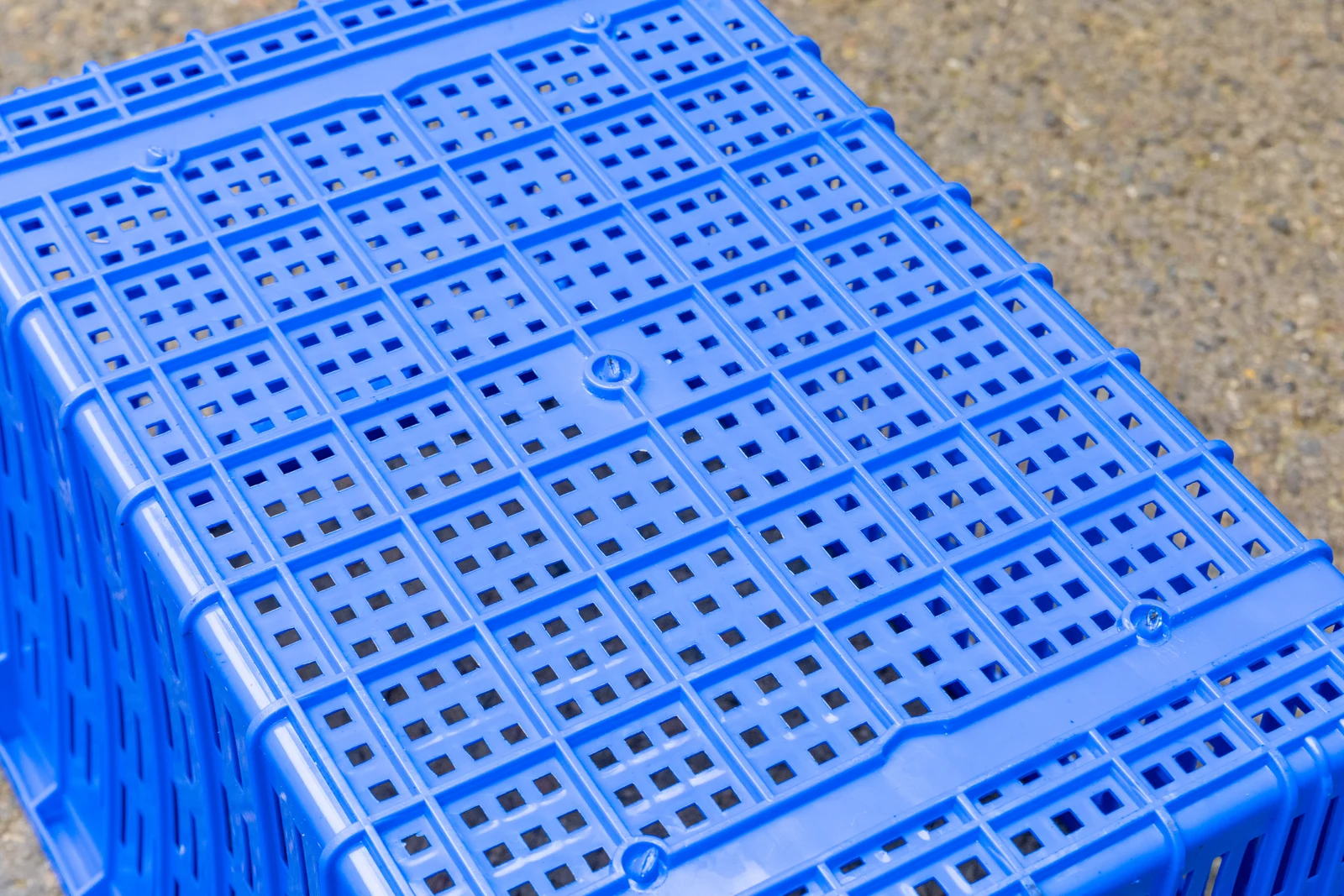
A crate can fit between the rails of a packing line and still hang up where it moves from one conveyor section to the next. If you are buying harvest crates from China for a Hawaii packing operation, send the supplier a drawing of the transfer and ask for the underside of the exact crate quoted. The dimensions at the top rim tell you little about which parts of the base touch the rollers or belt.
Ask what touches the line
Get a straight-on underside photo, a side profile and a dimensioned base drawing. Have the supplier identify the quoted model and revision on the drawing and mark the surfaces that bear on the conveyor. Ask for the width and length across those surfaces and the position of any raised pads, ribs or runners. Include the top dimensions separately so your line team can check guide clearance.
In one documented crate conveyor project, TEGEL-TECHNIK lists top and bottom dimensions separately, along with the direction of travel. Use that distinction in your request: the rim and the underside answer different questions.
Give the supplier the difficult part of the route
Sketch the stretch where the crate changes support: a belt feeding onto rollers, a gap between sections, a turn or a stop. Mark travel direction, roller spacing where relevant, the transfer gap and any guides or stops that can touch the crate. Ask the person responsible for the line to confirm those measurements and identify where the basket is least supported.
For example, if a line turns a crate before it enters a short roller section, record which edge leads into the rollers after the turn. Ask for that orientation in the sample review. A video of an empty crate moving along a straight belt leaves the turn and the loaded transfer unanswered.
Tie the sample review to the order
Agree with the supplier and line owner which base revision the sample represents and what load and distribution reflect normal use. Ask the line owner to define an appropriate check for the critical transfers and what counts as a pass. Where the supplier cannot reproduce the line, record what their demonstration actually shows and leave the site-specific check open.
If the sample catches at a transition, record the position and direction. Ask for a revised drawing or sample before accepting a change. Keep the approved revision on the purchase order and ask the supplier to confirm that the production base matches it. Request the rated load and its test conditions separately; the underside photo does not establish either.
- Exact basket model and drawing revision on the offer
- Underside and side photographs with the support surfaces identified
- Base contact dimensions and travel direction checked against the actual line
- Representative sample and load conditions agreed with the line owner
- Any untested transfer or proposed substitution listed before approval
Separate purchase fit from freight measurements
After the basket configuration is agreed, ask for final packed dimensions and gross weight for the shipping units. For a Super Value Hawaii sourcing review, send the base drawing, a sketch of the critical transfer and the destination island. Add the proposed packing record if you also need transport assessed. Island handover and costs are reviewed separately.